Showing posts with label europe. Show all posts

Saturday, January 29, 2011

Lisbon, Portugal (2005)

Our train arrived in Lisbon early the next morning, and we hopped a bus to downtown. There we discovered that Lisbon is quite hilly. Although our hostel was only 500 meters from the bus stop, the distance consisted primarily of 4 sets of stairs.

After dropping off our luggage at our hostel (Pensao Londres, 80 EUR/quad), we went back towards town and got breakfast at A Brazilica, a cafe that seemed quite popular with the locals.

Then, we headed towards Belem, where we saw an old monastery which housed the tomb of the explorer Vasco da Gama, a monument to Portuguese exploration headed by Prince Henry the Navigator, and the Tower of Belem.


We then tried to go to the Basilica Estrela, but got sidetracked at the Praca do Comercio, down by the water. We hung out for awhile, shopping and snacking, before finally catching the tram to Estrela. Unfortunately, when we got there at 7pm, there was a service going on, so we just looked at the exterior, peeked at the adjacent gardens, and then headed back.

We had dinner at Martinho da Arcada, one of the oldest restaurants in Lisbon. Despite its reputation and the nicely dressed waitstaff, the food was only so-so.

As we were walking back to our hostel, we saw lots of people in formal dress emerging from the subway to walk down a red carpet into some kind of event. That, combined with the fireworks setup that we saw in Belem, made us think that it must be some kind of holiday, but we couldn't figure out what it was.

The next day, we took a train to a nearby town called Sintra. There, we visited the very colorful Pena Palace, we walked up and down the walls of the "Castle of the Moors", and admired the view from the mountain top.


It was a comfortable day trip from Lisbon and a nice break from visiting big cities.

(I don't know what happened, but I seem to not have taken any notes on the very last day of our trip. I'm guessing we probably wandered around Lisbon some more? I have a couple photos that look like they were taken from up on a hill. Oops.)


On the morning of the fourth day, we caught our flight to Heathrow, and then back to San Francisco.

Now, over five years later, I'd say my favorite part of the trip was our visit to the Alhambra in Granada. I also have fond memories of eating paella in Valencia, and of our time in Paris; although I'd been before, it was very different having Parisian friends taking us around. In addition, we had never driven in Europe before, and it was really nice being able to see some of the countryside and smaller towns for once, rather than being restricted to trains and big cities.

Wednesday, January 26, 2011

Madrid, Spain (2005)

It took about six hours to drive from Seville to Madrid, so we arrived at the Hostal Adriano a few hours before dinner. Our quad was cheerfully furnished with colorful Ikea-looking furniture, but the elevator was broken and we were on the 4th floor. This was somewhat of a pain especially with luggage.

For dinner we went to a tapas bar called Taberna Maceiras, which was yummy and cheap. I especially liked their seafood dishes; mussels, clams, and a tasty octopus dish. Afterwards we walked around the Paseo de Prado and saw lots of fountains and interesting-looking buildings.

The next day we walked to the Puerta de Sol, to the Plaza Callao, and then up the Gran Via, pausing occasionally to shop along the way. I quickly decided that I liked Madrid better than Seville; the streets were wider and straighter, not paved with cobblestones, and everything was newer and grander-looking.

We had lunch at a cafe on top of El Corte Ingles (a giant department store) and then wandered over to the Palacio Real (Royal Palace) and its gardens.


We also stopped by the nearby Almudena Cathedral (not super impressive, or maybe we were sick of churches).

After walking through the historic Plaza Mayor, we found lunch at a wacky-looking restaurant called Malacatin. There, we paid 18 EUR apiece for a barrage of meats and vegetables, including: chickpeas, potatoes, cabbage, beef, ham, sausage, chicken, and lots of other dishes that I've forgotten. We ate ourselves sick, and then headed to the Museo Reina Sofia.

There were pretty good exhibits showcasing Dali, Miro, and Picasso, but otherwise I wasn't particularly interested in the rest of the modern art. The building itself was kind of cool looking, with glass elevators overlooking a square. We spent some time at an art fair that happened to be taking place outside.

For dinner, we ate at Arroceria Gala, which specialized in (of course) rice and paella dishes. The paella there was okay, but I still liked the version we had in Valencia best.

On our last morning in Spain, we finally got a chance to try traditional Spanish churros. The accompanying "hot chocolate" turned out to be almost the consistency of chocolate pudding, and about as rich. We'd only gotten two orders for the four of us, and were still unable to finish them. I can't believe Spanish people eat churros with chocolate for breakfast! It tasted very much like a heavy dessert to me.

We then spent a few hours at the Prado Museum. They had a great display of Goya paintings, including the 3rd of March, as well as some Velazquez, Rafael, El Greco, Titian, Rubens, Rembrandt, and Caravaggio. It was quite an impressive collection.

We also drove out to the Plaza de Europa to see the new "leaning towers" and to check out that area of town, before returning to our hostel to grab our bags.


From there, it was two transfers to get to the main train station; first the Metro from Sol to Plaza de Castilla, and then the SE (special edition, presumably?) bus to the Chamartin train station to catch our overnight train to Lisbon. We got on at 10:45pm, settled our luggage (our cabin consisted of two sets of bunk beds, a sink, and not much else), played hearts for an hour or so, and then went to sleep.

Thursday, January 20, 2011

Barcelona & Valencia (2005)

From Carcassonne, we drove over the Spanish border to Barcelona. All went well until we reached the city, and then there were a series of small mishaps. First, we missed a turn in a roundabout, so we came out on the Avenue Diagonal instead of the Avenue Meridiana. Then, we got stuck not being able to make a left turn for what turned out to be several miles. Finally, we got a flat.

Luckily our friends were much more useful than we were in this situation; the tire got changed in 15 minutes flat. We asked a passing couple for directions, and although they were very nice, their rapid mix of Catalan and Spanish was quite difficult for D to understand. Also, the two of them gave conflicting advice. D ended up trusting the woman, and did manage to get us to our hostel shortly afterwards. We'd had a great experience with the Pensione Fernando back in 2000, it was an easy call to go back there.

Similarly, for dinner, we returned to to Le Quinze Nits, off of the Placa Reial, and just like last time, while we were waiting for a table, we watched some poor tourist get their pocket picked. Ahh, Barcelona.

Dinner was fantastic. First of all, the four of us drank two liters of sangria. For food, I had beef carpaccio, a lobster and shrimp turine, and half of a "Catalana dessert" which tasted somewhat like flan. Everything was delicious, and the bill only came out to 38 EUR per couple.

The next day we got off to bit of a a late start. For breakfast, we had Spanish omelettes at a cafe off of Las Ramblas. Then we went down to the Hertz office to figure out out what to do about our flat. They wanted to charge us 120 EUR just to fix (not replace) it, so we decided to get it fixed ourselves before leaving town the next day. We bought our Madrid to Lisbon overnight train tickets since we were near the train station, and then finally set off on our self-guided city tour.

First, we hit the Sagrada Familia. The insides of the spires are hollow, and there is a (small, six-person) elevator that rises about 65 meters inside one of them. From there, we walked across a small bridge from one spire to another, and then ascended another 25 meters by stair. The stair circled around the spire's interior, with cutouts to either side, so we had some dramatic views of the city:


After coming back down, we went on a walking tour of L'Eixample district, which took us past several houses designed by Gaudi. We had lunch at a tapas place called Jofama, and then continued on to the Parc Guell. We walked around most of the park before heading back downtown for dinner. Despite not having reservations, we managed to squeeze in at 8:30pm (opening time) at Agua, a very popular waterfront restaurant, where we had fresh seafood tapas and entrees. For dessert we ordered an espresso mousse, which was supposedly created by Ferran Adria, but it wasn't as impressive as I'd expected. Afterwards, we walked around La Barceloneta (a neighborhood by the beach) for awhile before heading back to our hostel.

First thing the next morning, we went to find a tire repair place. It turned out to be quite an impressive operation; there was space for about four or five cars, and it was located at a triangular intersection, so the cars could easily drive in and out. It cost us 190 EUR to replace the tire, as it turned out to be unpatchable, but we figured Hertz would have charged us extra anyway.

Before leaving town, we stopped by the Olympic Park, where we wandered around for while in the garden near the torch, the stadium, and the entrance area.

From Barcelona it was about 3.5 hours to Valencia. Upon arrival we drove through the city to El Saler, just outside of town. We hung out at the beach for couple of hours; it was a bit rocky but the weather was warm and the water calm.

Afterwards we checked into our hostel (the Home Youth Hostel, for 62 EUR per quad), and set out to find some dinner. The restaurant recommended by our guidebook, El Rall, opened at 9pm, like most Spanish restaurants. We got there slightly before that to try and snag a table, which we did. There, we finally had a chance to try paella Valenciana (chicken & rabbit) in addition to some tasty tuna carpaccio. The paella was excellent, and the service size for four was extremely generous; we didn't even try to order dessert. The bill came out to less than 80 EUR for the four of us, so it was quite reasonably priced, too.

The one thing that we really wanted to see in Valencia was the new City of Art, Science, & Nature. Specifically, I'd heard "L'Oceanographique" aquarium was really impressive. So, we slept in a bit, and then packed up and headed there.

The entrance fee was pretty steep at 21.50 EUR, but it turned out to be really worth it. In three hours, we walked through all of the open exhibits and saw one of the two shows (the dolphins):


Other highlights included: walruses, beluga whales, penguins, sea otters, Japanese giant crabs, various sharks, and a Mediterranean exhibit. We also grabbed a quick lunch at a cafe inside, before leaving for Granada.

Wednesday, January 19, 2011

Chenonceau, Bordeaux, & Carcassone (2005)

The next morning, we got all packed up and took the Metro to Gare de Lyon to pick up the rental car. We spent a couple of minutes wandering around in the railway station before spotting a "voitures" sign. Then, when we spotted the Hertz stand, we saw that was boarded up and locked shut. I was pretty worried at first, but when we got closer we were able to decipher a sign telling us that the Hertz was now located across the street. After that, we quickly found the right place.

Unfortunately, that wasn't the end of our troubles. The person who was helping us seemed fairly junior, and he was certainly very confused by our reservation (which we had made through Auto Europe and not Hertz, with a reduced drop fee). It took us 45 minutes to get our car, which ended up being two classes larger than we had wanted (Peugeot 407 wagon). Apparently it was a pain to drive, not that I dared to attempt driving it in Paris. We finally got on the road around 11am.

Our goal was to arrive in Bordeaux by evening, but along the way we visited the Chateau Chenonceau, not too far from Tours. We spent most of the afternoon there, walking in the gardens and looking around inside the castle itself:


In Bordeaux we checked into our hotel, the Hotel Choiseul (kind of old and dingy), before having dinner at Le Valentino, a small but trendy Italian-French fusion place off of the rue St. Remi. We had some trouble locating the restaurant (my fault) so we did get to see a fair amount of Vieux Bordeaux (Old Town) that evening, as well as lots of fancy boutiques in the Palais du Bourse area.

The next morning we checked out and headed to a nearby laundromat. Laundry cost 3.80 EUR for a 3kg load (washer only), and 1.10 EUR per 10 min for the dryers. In the end it was quite expensive, but we didn't have much choice. At this point I realized we'd forgotten our travel towels in the hotel, so I ran back just in time to catch the desk clerk as he was leaving for the afternoon! Luckily he was able to understand my broken French and he let me in to retrieve our towels.

For lunch we got some panini sandwiches near our parking garage in the Place des Grandes Hommes. Then, we set out for St. Emilion, a famous wine region near Bordeaux. It turned out to be a charming area with lots of old buildings and small streets. We walked up a tower to admire the view, and then decided to rent some bikes to further explore the area (10 EUR apiece). During our ride, we also stopped by a small chateau called Villemaurine and had a nice tour and tasting.

We left St. Emilion around 6pm, and arrived in Carcassonne just in time to check into our hostel at a decent hour. We'd chosen a tiny place called Sidsmums which was run by a British family. It was pretty bare but cute, with wood cabins and pebbled paths, and it was completely dark and silent at night, so we got a good night's sleep.

We got off to a later start the next morning, partially because we consciously decided to sleep in a bit, but also because one of our friends had forgotten her wallet under her pillow, so we had to turn back and get it. I guess I wasn't the only forgetful one!

We had a fairly cheap (5 EUR) breakfast in a small cafe near the canal in the lower city, and then tried to catch the shuttle to La Cite proper. We waited about 25 minutes before giving up and driving up. Surprisingly, we had no trouble finding parking up there, and it only cost a couple of Euro.

We wandered around inside for most of the rest of the day, climbing up and down the ramparts and watchtowers, and exploring the castle and the churches, including one very old cloister wall:


We did some souvenir shopping on our way out, and I was surprised they didn't have the Carcassonne board game available.

Saturday, January 15, 2011

Paris, France (2005)

D and I moved back into our house around Halloween, but I'm still cleaning up boxes from my study. A few weeks ago, I ran across a stack of composition notebooks. Back before I bought my netbook, I used to keep travel journals using pen-and-paper. I have notes from our trip to Western Europe in 2005, our trip to Eastern Europe in 2006, Cambodia and Vietnam in 2008, and Argentina, also in 2008. I'm glad that I have all the details down somewhere, but when people ask me for travel advice, it's way better to have them online, so I think I'm going to take some time and start transcribing them into this blog.

I'm starting with the oldest notebook, which chronicles an 18-day trip through France, Spain, and Portugal that D and I took with two friends. We left San Francisco on September 2nd and returned on September 20th.

We arrived in Paris in late afternoon of the 3rd. I had pre-booked us at the Fourcy branch of the MIJE hostel, which turned out to be centrally located, with small but clean rooms (32 EUR per person for doubles). Reception spoke excellent English but I did have to speak a few words of baby talk to the guy selling phone cards down the street: "telecarte" "pour telephoner", and "oui".

One of our friends had a high school friend who lived in Paris with her boyfriend. We met up with her and she took us to her apartment in Montrouge, where they served us delicious homemade crepes. Her boyfriend is from Bretagne (Brittney) which is where crepes originated, so I imagine they were quite authentic. We had toppings such as salmon and cheese, eggplant and pork, and olives. For dessert the choices were: assorted fruits, lemon and sugar, nutella, chocolate, and cointreau with sugar. Delicious!

The next morning we had free baguettes, croissants, coffee and juice at the hostel, and then headed off to the Louvre, since it happened to be the one Sunday a month that museums in Paris are free. D and I had been to the Louvre previously (in 2000) but our friends had not, so we hit all the famous pieces first (Mona Lisa, Madonna on the Rocks, Venus de Milo, Winged Victory, etc.), before perusing the Richelieu wing at a more leisurely pace. We also saw the apartments of Napoleon III for the first time, which was a bit like Versailles, although smaller and less grand. We also hung out in the Jardin des Tuileries for awhile before meeting back up with the friends from the previous day, plus another who arrived from London on the Eurostar. Once we found everyone, we took the subway out to Montmartre, where we hiked up to Sacre Coeur.

I had been up there twice before, but the view is really nice and the surrounding neighborhood very cute, so I certainly didn't mind returning again. We tried to get lunch, but the restaurant that we had in mind was closed for holiday; apparently it's common for French people to do this in late summer. We finally just got some fresh sandwiches (ham and cheese, etc.) from a little sandwich shop.

After eating, we went to check out L'Arc de Triomphe, and then walked back up the Champs Elysees, past the shops to the garden-like area, before cutting over to Les Invalides, and then into the Musee Rodin. The museum was nice, small, and filled with Rodin sculptures, both in the gorgeous garden and inside the one small building.

For dinner, we ate at Le Petit Prince, where the decor was interesting and the food was fabulous. The special was a duck-themed meal with three kinds of foie gras; one raw, one chilled, and one cooked. I had an appetizer of mussels and a main course of veal, cooked with fondue cheese and onions. It reminded me of French Onion Soup, but with different cheese. For dessert we had warm chocolate cake and millefeuille with strawberries and cream.

On our last full day in Paris, we had planned to sleep in, but were woken up around 8am by the fire alarm. After standing in the courtyard for 10-15 minutes, we were told it was a false alarm, but since we were already up, we figured we'd just head out. Note to self: in the future, when there is a fire alarm, go ahead and take the extra five minutes to get fully dressed and pack a day pack, because everyone sure as hell will.

After that auspicious beginning, we decided to go to Notre Dame, followed by the Centre Pompidou, and then the Picasso Museum. We had some problems finding lunch again (everything was closed) but finally ended up at a brasserie called Les Quatre Fils, where we ate croque monsieur, omelettes, and salads.

Afterwards, we decided to go back to the river to catch a boat tour. We went by boat from Notre Dame to the Eiffel Tower, where we tricked D into taking the elevator to the very top, from where we took tons of pictures.


One of my relatives had recommended Le Relais de Venise, so we went there for dinner. Upon being seated, we were asked one question each: "medium, well done, or rare?" before being served a salad, bread, fries, and steak with a curry-style sauce. At first we were a little worried about the portion sizes, but then the waitress came back around and dished out seconds, which made it a great deal for 24 EUR each (including wine).

We then took the Metro to Montparnasse where we had drinks at the restaurant on the 56th floor, while waiting for the Eiffel Tower to light up (every hour on the hour). I snapped a lot of photos, none of which turned out, but it was a nice view nonetheless.

Tuesday, December 07, 2010

lunch at Hostellerie du Chapeau Rouge

During my week in Zurich, I went with some coworkers to Dijon for the weekend. Another coworker had recommended several restaurants in Burgundy, and it turned out that one of them was in Dijon, so we called them up on Friday and managed to get a lunch reservation for Saturday.

As an aside, we actually asked a French coworker to make that call, since none of the four of us had any confidence in our French-speaking abilities. I grew up speaking English, Taiwanese, and Chinese, so French is perhaps my fourth-best language, just edging out Japanese. Of the other three, one is an American living in Switzerland whose second-best language is now Swiss German, one is a Swede living in the US who probably speaks four or five languages not including French, and the last is a German living in Switzerland (I bet his French is the best).

Anyway, we got off of the train, dumped our bags at our hotel, and were off to lunch at the Hostellerie du Chapeau Rouge. Interestingly, the hotel itself is poorly reviewed, but the restaurant was recently awarded a Michelin star. I was certainly not impressed with the exterior facade:


The interior was surprisingly nice and modern, though, and soon after being seated, we were served a set of four amuse bouches:

I just realized that it's been several weeks and I've started to forget a lot of the details about the food. Also, most of the explanations were in French, so my comprehension was shaky to begin with. Oops. Anyway, I believe the first one was a falafel-like fritter, the second was a veal dumpling, the third a fairly bland sushi roll, and the last was a veggie spring roll. The dumpling was by far the best.

The wine menu was very extensive and way beyond me, but luckily we had a wine expert at the table, so he ordered us some champagne to start, and later on tried out several local reds:

We chose the tasting menu (of course), so the wine consumption was spread over the next four hours.

There were four or five varieties of fresh bread, all of which were tasty, but my favorite was this olive bread:

I was amused when the waiter offered us a second piece of bread after a few courses, and he seemed shocked and/or offended when one of my dining companions refused. The next time he came back we all obediently made additional selections.

The first real course was a foie gras au torchon with potatoes and champignons. Everyone else liked the foie gras very much. I liked the mushrooms very much.


Next was a shrimp tempura paired with (I think) rabbit, with giant capers:

The shrimp tempura was very, very good; it may have been one of my favorite things on the menu. Whatever the meat was, I did not enjoy it at all; it was very gamey (and I typically like game) and very fatty.

This interesting presentation is of a sea scallop, served with corn puree and more champignons:

It was quite good but interestingly I liked the accompaniments more than the scallop itself.

The fish course was next; I believe it was some kind of sea bass, with shaved black truffle and some assorted vegetables:


I had this veal shortbread dish instead, with fresh pasta underneath. The shortbread was pretty good but very crispy and salty, so I couldn't finish it. The pasta was fresh and delicious and I ate every bite.


The poultry course was a duck breast with some vegetables. I don't remember much about this dish so I guess it wasn't particularly memorable.


I do remember this beef. I was quite surprised to find it very overcooked; I gave up after only a few bites. It compared very poorly to the sous vide beef that I'd had at Baume last month.


There were four "dessert" courses, the first of which was this cheese mousse, served with prunes and honey, with mesclun salad and a black pepper tuile:

This was my favorite dessert, and possibly my favorite dish overall, since the gamey rabbit offset the delicious shrimp. The cheese mousse looked like it should be sweet, but it was not sweet at all. It was extremely cheese-flavored, but not cheesy. I thought it was very creative, unusual, and very delicious.

Next we had a pear-themed dessert. I think the pear was prepared three different ways; there were chunks of cooked pear, there was pear flavor in the cream/foam, and there was some kind of sugary syrup as well. It was tasty but not as impressive as the previous course.


I liked the next dessert better; it was a trio with passionfruit souffle, pineapple sorbet, and pineapple rum. The sorbet and the rum were not that interesting, but the souffle was amazing; the texture was perfect and it was tart enough even for my taste.


I was a bit surprised that the last real course was the lightest of the desserts; it was a very simple grape sorbet served on a toffee crisp with some citrus-y sauce. Again, yummy but not that interesting.


Finally, we were served four types of petit fours. I believe the pink one was a raspberry meringue, the macaron was chestnut flavored, and the tartlette was apricot. The fancy one in the back was pistachio on fruit gelee on top of a piece of chocolate with financier underneath. It was also my favorite of the four.


Overall it was a very satisfying meal. The service was outstanding, despite the occasional language difficulties, and the decor and the tablescape were impressive. The food was a bit uneven; it seemed like some of the courses were much more ambitious than others, and I was especially disappointed in the overcooked beef, but the shrimp tempura, the shortbread pasta, and the cheese mousse were all creative and memorable. The foie gras and the passionfruit souffle were very well executed as well.

It was after 4:30pm by the time we left the restaurant, so despite walking around for several hours after eating, none of us were interested in dinner. Instead, we caught a showing of Orlando at L'Opera de Dijon, and then went straight to bed.

Monday, December 06, 2010

Zurich wrap-up

I've been back from Zurich for several weeks now, but what with hosting Thanksgiving and and then having houseguests last weekend I hadn't got around to writing about it until now...

I really enjoy visiting our other offices; instead of feeling like a tourist the entire time, you start to feel a little bit like you belong, when you take the tram to the office or buy groceries or go out for dinner or drinks with coworkers after work.

Some random thoughts:
- Everything was at least 25% more expensive there. I discovered upon arrival that I was short two pairs of socks, so I went out to try to buy some. Despite the store being located in the basement of a train station and the socks being regular black cotton socks, it cost me 15 CHF ($15.25) for two pairs. Ouch.
- I love European breakfast. I could eat just the bread and cheese for weeks. At our office they also had delicious cold cuts, a fresh OJ machine where you can watch the oranges being squashed, fresh yogurt, muesli (of course), granola, and other yummy things.
- It seemed like there was chocolate everywhere. Just in our office, I think there were like 20 kinds of chocolate lying around, if you counted the mini-kitchens, cafes, and the random boxes sitting on people's desks. I became addicted to Sprungli Lilliput truffles and bought nearly $100 worth of Sprungli on the day I flew home.
- Every time I leave suburbia and live in a real city for a week, I rediscover the fact that I like being close to restaurants and shops and cafes and people, and being able to walk or take public transit everywhere. Then I go home and realize that my house is really comfortable, my yard full of trees is quite pretty, and oh, I like driving. Obviously the solution is to have two homes! Yeah, I'll get cracking on that.
- Switzerland is really pretty. The mountains and the lakes combine for some spectacular scenery. On our TGV to Dijon, we stopped by Bern. We were only there for about 15 minutes, but even from the train I was impressed by the sight of the bridges over the Aare river. Maybe I just like hills because I grew up around San Francisco.
- I already knew this, but being able to take a weekend trip to France just reinforced for me the fact that Europe is really small. (Photos from our lunch at Hostellerie du Chapeau Rouge to come.) I was thinking, if I lived in Zurich for say, several months, I'd be able to go all over the place! I could go skiing in Zermatt, hiking in Lugano, wine-tasting in Tuscany, and castle-hopping in Bavaria. (D's company opened an office in Zurich this year, so we've been hoping he'll get sent there at some point. Fingers crossed.)

Wednesday, November 17, 2010

Zurich 1, Mountain View 0

In Mountain View we have a slide that goes from the 4th floor to the 3rd floor.

Here in Zurich, they have a fireman's pole that goes from the 2nd floor to the 1st floor, and then a slide that starts on the the 1st floor and ends right in the middle of the ground floor cafeteria. The slide is curved in a tighter spiral than in Mountain View, and isn't covered the whole way, so you kind of get the feeling that if you weighed a little more and went a little faster, you might be able to jump the side while sliding down. Also, they correctly 0-index their floors here.

(Tip on using a fireman's pole: brake with your legs!)

high school...not totally useless

I'm spending a week in our Zurich engineering office, visiting some engineers that I've worked with for years, but many of whom I've never actually met face-to-face. It's been fun; everyone's really friendly and I've gotten lots of invitations for lunch, dinner, coffee, drinks, and even foosball.

Anyway, I flew Swiss Air nonstop from SFO on the way over, and all the announcements were done first in German, then in French, and finally in English. It was the same at the Zurich airport, and again on the rail (6 CHF from the airport to the "Hauptbahnhof" main station). I was a bit surprised to discover that my high school French is good enough that I usually understand what's happening without having to wait for the English translation.

(As an aside, there are like twenty kinds of Swiss chocolates in the various kitchens and cafes on the seven floors of this office. It might be deadly to stay here too long.)

Saturday, November 21, 2009

Tantris

On the last night of our trip, we had dinner at Tantris, a Michelin two-star restaurant in Munich.

The interior was very modern and boldly colored, with interesting lighting:

The table was set with very cute silverware. The knives were super thin but still effective, and the forks and spoons were asymmetrical (the forks had varying tine lengths, and the spoons were tilted slightly to the left, which was awesome for us right-handers but I imagine would have been annoying for a left-handed eater):

There was a 5-course option and an 8-course option, and at first we were leaning towards the 5-course, but in the end we went with the 8-course because it looked much more interesting.

We started with the cocktail of the day; a slightly alcoholic fresh quince drink with Italian soda. It was light and yummy. Soon after placing our order we were served a basket of three breads; one tasted like country French, one was plain white, and the last was one of those very heavy nutty German breads. I liked the country French best, and had to stop myself from eating several pieces of it.

The amuse bouche was a baked pikeperch with cucumber, dill, and cream sauce. They said it was baked but I swear it tasted fried (yes, I actually tried cooked fish), the crust was so good:

We had two options for the first course:
- Terrine of duck liver with figs, celeriac and confit duck breast
- Roasted lobster with marinated pumpkin and apple

I chose the lobster and D chose the duck liver:


With the exception of dessert, this was my favorite course of the evening. The combination of ingredients and sauces was amazing...as D said, there was a "lot going on" but unlike some busier dishes at other restaurants, the flavors actually went together. The lobster was tender and juicy, the thinly sliced pumpkin and radish had great texture, and there were at least four sauces on the plate. The dominant one was a tangy, lemony sauce that acted like a dressing for the vegetables. Then there was a green herb-y sauce that tasted like it might be basil, a white creamy sauce, and a couple dabs of a sauce heavily spiked with fish eggs. Finally, there was a little mound of apple compote. Yum!

Although the main component was different, the duck liver was actually prepared similarly to the lobster, very artistically with lots of sauces and garnishes. It was served with crostini, and D said he liked it very much.

Next came scallops with roasted Jerusalem artichokes, mushroom puree, and curry cream. The scallop itself was good, and the mushroom puree was amazing; I haven't seen mushroom prepared that way before anywhere. However, the curry cream was a bit salty, and I found myself wanting to eat more bread to offset that:


At this point we were supposed to be served red mullet with spinach, cabbage ravioli and port wine verjus. I had asked for a substition earlier, since mullet is fish. To my surprise, I was offered a medallion of veal with artichokes and radicchio risotto. Score!

The veal was quite yummy and I didn't mind the artichokes. The risotto was okay; the texture was not the best I've had, and it was again salty. In fact I think my most consistent complaint at Tantris was that the food tended to be saltier than I like.

D had the mullet, he said it was also a bit salty, and although the skin of the cabbage ravioli was good, the filling was only so-so:

After that, we were served a simple oxtail broth with strips of cut up "pancake" and what tasted like mirepoix (onions, celery, carrots):

The soup was rich and flavorful, if also a bit salty, and the strips were fun to eat.

For our last main course, we had saddle of lamb au gratin with beans and eggplant couscous:

I don't know what "saddle" means, but to me it looked like two parts of the lamb; rack and loin. I liked the dressing on the loin; it was tomato-y, fruity, and tangy. The eggplant couscous was so-so (I'm not a big eggplant fan), and the lamb rack surprisingly had less flavor than the loin. The meat itself was very good quality; no game-y taste at all. However, it seemed to be medium rather than medium rare, which I prefer. Despite that, I think this was my second favorite savory course.

For our cheese course we were served Taleggio (Italian), Chaource (French, cow's), and St. Maure (French, goat's):

The cheeses were accompanied by apple and fig compotes:

The cheeses were all quite good; my favorite was the Taleggio, while the Chaource seemed a bit bland. However, I would have prefered more variety, as all three were soft cheeses.

The first dessert was a coconut souffle with pineapple ragout:

Early in our meal, I had noticed the waiters talking to each other to speed up our service, once they realized that we ate really fast (especially by European standards). Shortly after we finished our cheeses, I noticed that one waiter subtly swung by to peek at our table, realized we'd finished, and hurried back to the kitchen to let them know. Several minutes later I saw him checking his watch, presumably to see if the souffle was ready yet. Great service all around.

Anyway, the souffle was marvelous. The texture may have been the best I've ever had; it was light and fluffy but sprang back when bitten, and it was just the perfect degree of sweetness (coconut desserts are often too sweet). The pineapple ragout was a nice flavor contrast, adding some tartness to the dish.

I thought there was no way that a sorbet dessert could match that, but the "chilled quince soup with sorbets" looked and tasted a lot better than it sounded. I really never knew how much could be done with quince, before this meal. The soup combined quince with champagne, and as a result was pleasantly frothy. The sorbets were pressed together in a pyramid shape, with very thin layers of I think chocolate in between. The flavors were lime, plum, and (of course) quince. Under the sorbets there was a scoop of chocolate mousse:

I know that sounds like way too many flavors in one dessert, but trust me, it was delicious.

Finally, we had a nice assortment of petit fours:

I thought the yellow one was key lime pie, but it didn't taste very tart. It had an almost carrot cake-like texture, and tasted nutty, but I couldn't place the exact flavor until I saw pistachio powder at our breakfast buffet the next morning. That and the raspberry tart were my favorites; there was also a coffee cake, a grape and cream tart, a vanilla bean cream puff, and a jam buckle (again, couldn't quite identify the type of jam). Very nice.

Overall, the food was quite good. I would say that several dishes were saltier than I would have liked, but not so much that it overwhelmed the other flavors. The biggest strength (food-wise) was ability to combine lots of tastes in very creative ways. However, I would say that the service was even more outstanding. The waitstaff were polite, friendly, efficient, and good at anticipating needs. Then, after the meal, we were given a free ride back to our hotel, in a gorgeously-appointed BMW, complete with new car smell. Amazing.

Wednesday, November 11, 2009

Poland in short

We only spent five days in Poland, but it was time well spent!

A few quick hits:
- What a difference a few degrees makes! Russia was interesting and I'm glad we went, but I felt sluggish the whole time, due to the freezing weather. Poland was only a few degrees warmer (highs around 5 C) but we were much more energetic and able to wander around outdoors for hours at a time.
- It's really amazing what Poland has been through, and how they have managed to rebuild and grow. Between the Nazis and the Communists, the Polish weren't really free until 1989. In the last twenty years, they have significantly improved human rights and free speech, transformed into a market economy, built impressive museums and memorials, joined NATO and the EU, and more. Remarkable.
- Polish people seem to tend towards dry humor, but are often very funny. At the Wieliczka Salt Mines, our guide would often say something, pause for several seconds, and then say something else that made us realize that the first thing had been really funny. At the Uprising Museum, the guy collecting tickets pretended to be mean and unfriendly for a few seconds before cracking a grin and becoming really helpful.
- Polish food is a combination of really yummy and more questionable stuff. I did not like the dumplings at all; they were way too doughy and bland. The Polish sausages (kielbasa!) were very tasty and my only complaint was that they start to get heavy after awhile. The "smalec" homemade lard on bread is the best invention ever, I could eat the fermented rye soup every day, and the cabbage fried with bacon/pork is delicious as well. I prefer Russian desserts, though.

Monday, November 09, 2009

visiting Auschwitz

Yesterday, we went to Auschwitz to see the site where the Nazis murdered millions of people, mostly European Jews.

We'd had a good experience with Cracow Tours the previous day, so we went with them again. We were picked up at our hotel by mini-bus around 9:15am, transferred to a central location where we got on a big bus. It was certainly a popular tour as the bus was nearly full.

During the hour-plus drive from Krakow to Auschwitz I, we were shown a video featuring footage taken by the Russian Red Army when they liberated the camp in 1945. (Auschwitz consists of three actual camps; the original Auschwitz I, the largest Auschwitz II Birkenau, and the smaller Auschwitz III Monowitz, strategically located near a Germany factory so they could use the prisoners as forced labor.) As expected, it was a disturbing video, and between the video content, the somewhat bumpy ride, and the lack of circulation in the bus, both of us were a bit queasy when we arrived.

We spent nearly two hours touring the barracks and exhibits at Auschwitz I with a local guide, Simon. He was informative, opinionated, and had a strong local connection; his great-uncle had been imprisoned at Auschwitz for "political" reasons, and his wife's grandmother had nearly ended up inside as well, after trying to give food to some of the prisoners. Luckily for the grandmother, her husband had managed to bribe the SS men into letting her go.

Looking at numbers like "3 million Poles" or "6 million people", we know intellectually that it's a lot of people, but it's hard to get a real grasp on the scale of what happened there. Some of the exhibits helped a bit; there was a 30-meter long display filled with two tons of human hair (the Nazis shaved women's heads and used the hair to make blankets and jacket linings), another of thousands of eyeglasses, one of several thousand suitcases (representing a single train of arriving prisoners, when trains arrived multiple times a day), and more.

We also saw suffocation cells, starvation cells, standing cells (about a square meter, in which up to four prisoners were forced to stand), a gas chamber (where up to 3000 prisoners could be murdered at a time), a crematorium (where over 300 bodies would be cremated every day), mass gallows, a courtyard where shootings were carried out, lots of barbed wire fences, small huts where SS men would stand in inclement weather, and the infamous German "Work will set you free" sign over the gate of Auschwitz I.

Simon told us some stories; he's met several survivors of Auschwitz, and even now, they are badly scarred by their experiences. One woman can't stand striped clothing, because they were forced to wear stripes. Another man saw a funeral shortly after leaving the camp and couldn't reconcile all the crying and mourning with "just one coffin". Some former prisoners have severe reactions to white smocks, the German language, and other triggers.

We heard about a priest, Father Kolbe, took the place of another prisoner in a starvation cell, and when he failed to die after having been starved for several weeks, the frustrated SS men shot him to death. Later he was canonized by the Catholic Church and made a saint.

Simon also told us about a woman who was an obstetrician, who gave illegal abortions to women who arrived pregnant. Visibly pregnant women were immediately "selected" for death, but women who were early enough in their pregnancies might escape initial detection. Once they started showing, they would be killed, so the abortions allowed them to perhaps live longer. For the prisoners, often the only goal was to survive another day.

Several hundred people tried to escape Auschwitz, and some succeeded. In one successful attempt, four prisoners who had good "jobs" managed to steal SS uniforms and guns, and actually walked out of the camp posing as high officials. The Nazis punished escapes and escape attempts severely; if one person tried to escape, ten people from his/her barrack would be killed, to serve as a warning. There were also attempts at rebellion but none succeeded.

We saw walls and walls of prisoner photos, mostly political and non-Jewish. (After 1942, when Auschwitz evolved from a labor camp into a death camp, most Jews were killed immediately and not registered and photographed.) When prisoners arrived in the camp, 75% were "selected" for instant death by gas chamber (the elderly, the sick, children, pregnant women), and the others were sent to the labor camps to work 11 hours a day on a daily diet of 1500-1700 calories. Auschwitz II Birkenau (which was huge, 425 acres and ten times the size of Auschwitz I) was built using the forced labor of these prisoners. Those who worked generally lasted only a few months before dying of exhaustion, starvation, and/or disease.

There were only a few latrines in the camp, and prisoners were only allowed to use the facilities twice a day; once in the morning and once at night. Because of starvation diarrhea, prisoners ended up soiling themselves regularly, and as a result, typhus, dysentery, and other diseases were rampant. The Nazis actually avoided the toilet areas because they were afraid of catching the diseases, leaving one area where prisoners could more safely communicate and effect black market transactions of items found on dead bodies and in suitcases of arriving prisoners.

The belongings of the prisoners were sorted, cleaned, and sent to Germany. Gold teeth were melted down, clothing was disinfected, and jewelry and valuables were extracted from various hiding places. Belongings which had not yet been sent away were stored in storehouses which were nicknamed "Canada" by the prisoners, as Canada was considered a land of plenty. On the signs that we saw, the storehouses were actually labelled "Canada I", "Canada II", etc.

There was an exhibit with photos which attempted to document the degree to which the prisoners were starved. One woman weighed about 23 kg (50 lbs) when she was liberated. In the photos of her four months after liberation, she still looked completely emaciated. Several prisoners died after leaving the camp because they tried to eat normally, and their stomachs could no longer deal with the food.

After looking at the exhibits at Auschwitz I, we went to Auschwitz II Birkenau a few kilometers away. There was no museum there, only empty barracks, but the vastness of the place was much more striking. The Nazis destroyed much of the camp when they realized the Russian Red Army was advancing on them, but there are still ruins that go for miles.

By the numbers: about 6 million people, mostly Jews, were killed by the Nazis in concentration camps during World War II (of course, many more died outside the camps, in battle and otherwise). Other groups which were targeted were: political prisoners (Poles, Russians, and more), gypsies, homosexuals, and other "undesirables". About 1.3 million of those were imprisoned at Auschwitz, of which about 1.1 million died. Only prisoners at Auschwitz were tattooed with registration numbers. Before the war, there were about 3.5 million Jewish people in Poland, which was nearly a third of the population. About 3 million Polish Jews were killed by the Nazis in the camps, and many others must have fled, because there are only tens of thousands left today. Jews were sent to Auschwitz from all over Europe; France, Austria, Hungary, Yugoslavia, Ukraine, and other occupied areas. Great Britain escaped this fate, as it was not occupied, having won the Battle of Britain. In one particularly brutal period, half of all Hungarian Jews (over 400,000 people) were sent to Auschwitz and murdered in a period of only 56 days. Overall, about 6 million Polish people died during World War II, which is about 20% of the pre-war population.

A variety of political and ethical questions remain. Simon seemed to think that the Allies should have taken action during the war to bomb the camp, the train lines, or otherwise break the mechanism and delay the killings. Others question the local population and ask if they were not anti-Semitic, why they didn't do anything to help. In one heated exchange, a person on our tour accused Simon of spreading propaganda and actually compared the wars in Iraq and Afghanistan to the atrocities committed by the Nazis, which I thought was ridiculous (and I think the rest of the group did too). Godwin's Law, indeed!

It was true that Simon had a strong anti-Soviet bent; he told us "anyone who says Poland accepted Communism is lying", and also mentioned that his great-uncle who survived Auschwitz only to be imprisoned by the Communists later. But, I imagine Poland suffered quite a bit during the Iron Curtain days, so his animosity is likely justified.

Anyway, Simon handled the situation pretty gracefully and proceeded with the rest of the tour. As I told D later, it's possible that Simon had a biased view, but it seemed to be a very Polish view, and that's why we're in Poland; to hear about that viewpoint.

In the end, we were both glad that we had gone to Auschwitz; it's one thing to hear in clinical terms about millions of people being killed, but it's yet another to hear the stories and see the possessions and the eerily normal-looking brick barracks.

Wednesday, November 04, 2009

additional impressions of Russia

There are a lot of police in Russia, kind of like there were a lot of military all over Jordan. The police don't have machine guns, though. Our tour book says to avoid attention from police, but generally they seem pretty nice and their uniform hats (the cute fuzzy ones) make them look approachable. The one police officer we actually talked to (for directions) was friendly and helpful, although he spoke no English.

People in Saint Petersburg don't walk nearly as fast as in Moscow, and they are somewhat less fashionable. This gives the whole city a more laid-back feel, which I like much better.

It appears that although they dress well, Russian people don't bother with fancy hair that needs "work"...pretty much all the women just have long, straight hair. I guess as soon as you walk out the door and put on that hat, you have guaranteed hat hair anyway.

Everything opens late here. The major tourist attractions open at 10 or 10:30am, in contrast to Egypt where they open at 7 or 8am. Part of it is probably that the sun doesn't come up until 9am or so, but I'm guessing there aren't enough tourists to justify opening earlier, either.

It's really quite necessary to learn the Cyrillic alphabet to get around here. For instance, "Restaurant" is spelled "Ресторан" and only a very few will have the Latin spelling on their signage. We might have walked right by Cafe Literature without being able to read "Литературное кафе". Street names are similarly untranslated, and less popular museum exhibits are often labelled in Cyriliic-only, as well. At the Hermitage, I stared at a sign for awhile before figuring out the artifacts were from Сирия (Syria) and Ирак (Iraq).

There are cloakrooms everywhere. Every time we walk into a restaurant, a cafe, a museum, or whatever, the first thing you do is go to the cloakroom and leave all your outerwear. In return they give you a claim tag It never costs any money, and they'll store all kinds of stuff; in the Hermitage they stored D's daypack along with his jacket.

first impressions of Russia

I'd been prepared for Russians to be grumpy and possibly hostile, especially towards Americans, but most everyone that we've met so far has been really nice. The guy who picked us up from the airport was smiley and helpful (as soon as he saw us he pointed at his jacket and said "outside! cold!" so I dug out my fleece), and our bellboy was super friendly (turns out he's going to Egypt on vacation next week). For dinner, we ventured out to a nearby cafeteria-style restaurant called "Mu Mu", and one of the guys behind the counter turned out to have excellent English, so he followed us from display to display, explaining what everything was and helping us pick our dishes.

Anything involving process takes forever. When we were in the immigration line, the pace was something like one passport every three minutes. There were at least ten people in front of us. However, Russians are pretty orderly and respect lines; the ticket line for the Armory (at the Kremlin) was not well defined but people managed to stay in order. We were chatting with some other tourists and apparently the non-Armory part of the Kremlin has been closed for three days straight, and no one could figure out why (the ticket lady helpfully told us "Kremlin closed!"). Later our concierge told us that they're preparing for some kind of festival for the first week of November.

Interestingly, US passports seem to carry some clout here. (I would have thought the opposite.) We got through immigration very quickly compared to everyone else (maybe one minute instead of three) and once we showed our passports and told them where we were from ("California") we were not required to put our luggage through the x-ray machine, even though everyone else on our flight from Istanbul seemed to be doing it.

Two black guys got picked on by security while in line; they had to show lots of extra paperwork and went to another room for awhile. Not sure what was going on there, but we had been warned about possible racism, so I'm thinking that's a distinct possibility.

There are lots of Asian-looking people around, but they all seem to speak Russian perfectly, so it seems they're locals and not tourists. Twice, we were approached by people speaking Russian asking for directions. Maybe our scarves, hats, and gloves make us blend in enough that we could possibly be mistaken for locals? Odd.

However, only about half of the people on the street are wearing hats these days. I guess barely sub-zero isn't considered very cold around here. There are definitely lots of women running around in spike-heel knee or thigh-high boots and short skirts, with about a foot of skin exposed in the middle. Did I mention it's sub-zero out there? Yikes.

Russians walk VERY VERY fast. I thought I walked fast, but I'm the slowest person on the street. Honestly, New Yorkers have nothing on Muscovites as far as speed goes. One girl (four-inch heels, tiny skirt) stopped to give a panhandler money and was still walking faster than me). No wonder they're skinny here.

Russians are also very tall. I think the guys average something like 6'3". It's harder to tell with the girls because they're all wearing such high heels, but with heels on, they probably average around 6'0" too. Apparently I'm a midget who walks too slowly and needs new shoes.

Oh, and according to D, the Russians have taken over the "hottest girls" award for this trip. I think generally they look a little pouty but they're certainly tall and model-thin and very trendy.

In the tourist areas, lots of people speak a little English, or at least understand it. Outside the tourist areas, people speak no English at all. At the train station, several people were trying to be helpful but literally could not tell us whether to go "left" or "right". One policeman ended up walking with us for awhile in the direction we were supposed to go, because he couldn't explain it to us. Nice of him, though.

The Metro is quite nice and very comprehensive, covering a lot of ground. The stations are all decorated differently, and the trains run constantly; on a weekend in the middle of the day, the trains were coming about every two minutes. The longest we've ever waited is maybe four minutes.

The Metro is pretty cheap (22 RUB = 70 cents) but everything else is very expensive. We spent 700 RUB (> 23 USD) on a cafeteria-style dinner, entrance fees are like 500 RUB per person (18 USD) and we were also quoted a taxi price of 500 RUB for a relatively short drive (we opted for Metro).

It appears that glasses are relatively uncommon in Moscow. The entire day, I spotted maybe two women wearing glasses, and maybe twenty men. This is out of hundreds, maybe thousands of people that we passed in the subway, on the street, etc.

Wednesday, July 09, 2008

sexism causes decreased birthrate?

For some reason or another, there's been a lot of press recently about people deciding to have kids (or not).

In the gym yesterday, I ran across an article in last month's New York Times Magazine entitled No Babies?, that examines some possible causes for Europe's super-low birth rate. Apparently European birthrates recently dropped below 1.3. If that rate is sustained, the population will halved in 45 years (faster if the rate drops lower).

Without having read the article, my guess for the low birthrate would have been that Europeans are deciding they were happier without (or with fewer) children. The answer the article provides is more nuanced, but is not far from that. It points out those European countries that have "greater gender equality...better social commitment to day care and other institutional support for working women" have higher birthrates. I bet the women in patriarchal societies have one child, discover their life now sucks, and decide not to have any more, whereas women in egalitarian societies discover hey, not so bad, and choose to have second or third children.

A quote from the article about the countries with more chauvinistic cultures:
"All of these are societies still rooted in the tradition where the husband earned all the money. Things have changed, not only in Italy and Spain but also in Japan and Korea, but those societies have not yet adjusted. The relationships within households have not adjusted yet.” Western Europe, then, is not the isolated case that some make it out to be. It is simply the first region of the world to record extremely low birthrates.

I guess they better adjust, pronto. Japan and Korea both currently have fertility rates around 1.1, and they may still be dropping.

Another article, in Newsweek, examines the question of whether having kids increases or decreases happiness. A recentl study found that parents "definitely experienced more depression" and "parental depression increases along with the number of children parents have". Of course the researcher got tons of hate mail from parents saying that she must hate her children and so on, but there were some more considered (and more interesting) responses, too.

One blogger wrote:
I like the amateur marathoner metaphor: survey a marathoner in the midst of the race and they'll complain about their legs and that rash and how the race seems like it's taking forever. But when the running is over they are always incredibly proud of their accomplishment. Having kids, then, is like a marathon that lasts 18 years.

Finally, a few days ago I read an article about how guys have a biological clock, too. Apparently older men (starting from mid-to-late 30s) are more likely to produce sperm with damaged DNA, which lowers the rate of conception and raises the rate of miscarriage. So, I guess the moral of the story is, women who want to postpone having children should pick younger guys, to increase their eventual chances of conceiving? Or something.

Sunday, March 09, 2008

public policy & population

I guess the Swedish just really don't want to have kids!

From a mailing list, in a conversation about paternity/maternity leave:

...it's 18 months that we get in Sweden, with dad having to take at least 3 months of it.

Technically, both parents could get a job, and then produce children at the rate of 1 every year or so until retirement, and never work again.

The fact that even with this policy, our nativity rate is sub-self-sustaining, and that only 40% of fathers even use the benefit at all (average 38 days), is an interesting demonstration of how little impact policies have on the behavior of people.

Thursday, May 24, 2007

words of a queen

For some reason, I've always been fascinated by European royalty. I've read all about Eleanor of Aquitaine, Henry VIII and his wives, King Ferdinand and Queen Isabella, William the Conqueror, and many others.

Recently, I've been on a Queen Elizabeth kick. Rosalind Miles' I, Elizabeth is a fairly easy read, but I don't think it does justice to the real Queen Elizabeth.

Anyway, I recently came across this Queen Elizabeth quote in a recent SF Chronicle article, which I liked very much:

Queen Elizabeth I [...] in her famed speech to English troops before their showdown with the Spanish armada declared: "I know I have the body but of a weak and feeble woman; but I have the heart and stomach of a king, and of a king of England, too, and think foul scorn that Parma or Spain, or any prince of Europe, should dare to invade the borders of my realm."

Tuesday, February 13, 2007

Swiss chocolate

A coworker arrived from Switzerland a few days ago, and brought with him a large amount of Swiss chocolate. By large, I mean that our team has been eating it for several days now, and we've consumed maybe a fourth of it, tops. I'm so spoiled now, I can't even eat Godiva anymore. I certainly can't eat Hershey's.

Monday, October 23, 2006

Eastern Europe photos

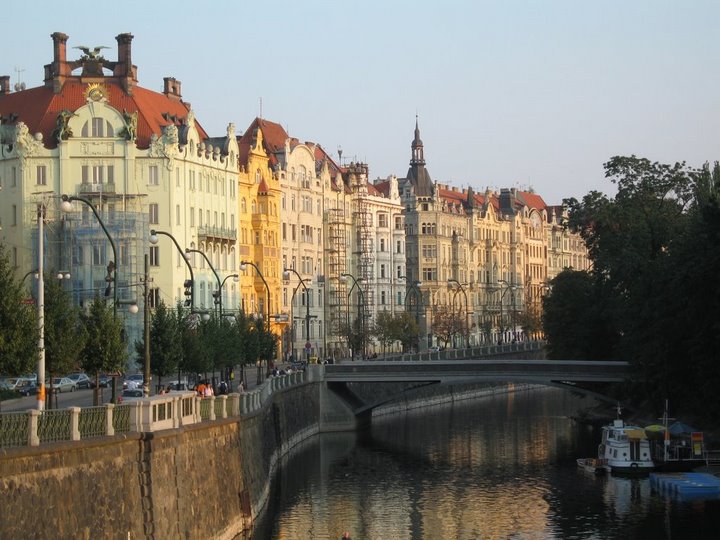
Prague

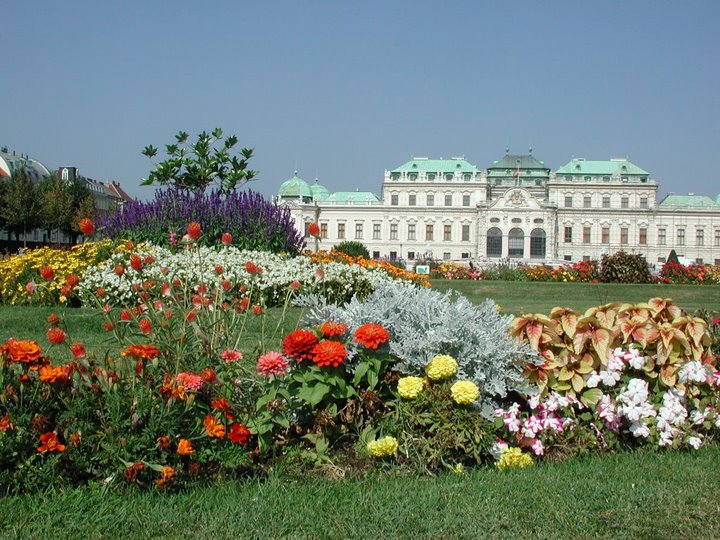
Vienna

Bratislava

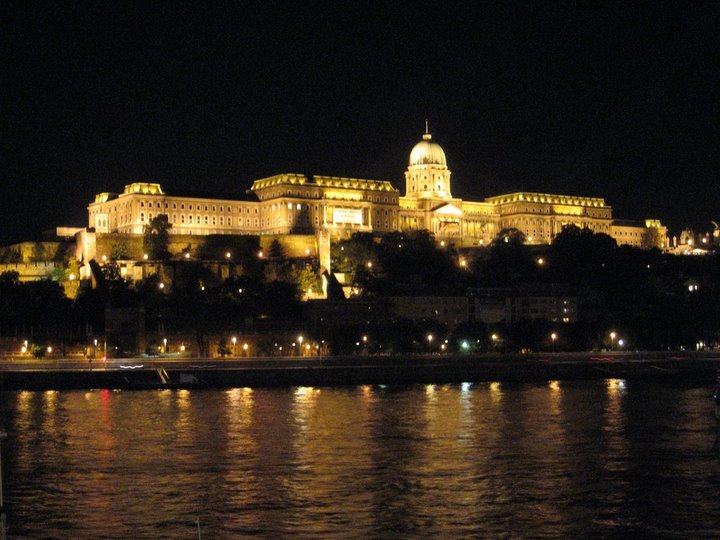
Budapest

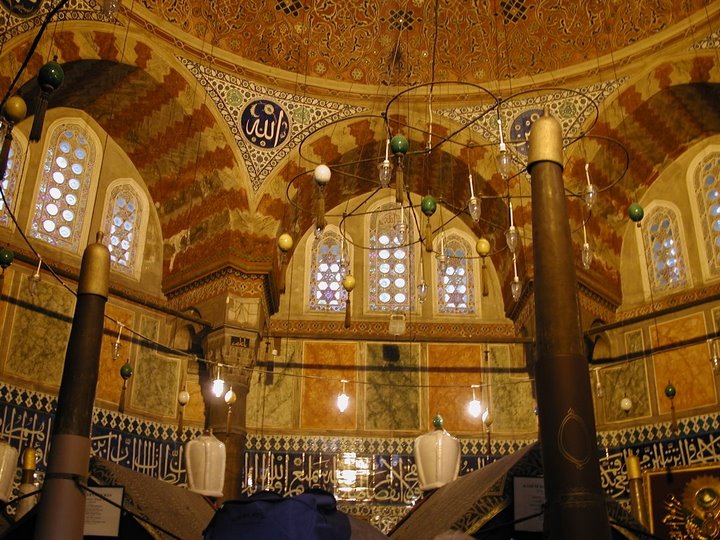
Istanbul


This is my personal blog. The views expressed on these pages are mine alone and not that of my employer.